How to Build a Car Rental App Like Turo: A Complete Guide
1485 Views
16min
January 20, 2026
Last Updated: June 23, 2026
Boost Your Businesswith AI Powered Products!
Enter your details for expert insights and a personalized action plan.
Share
Something interesting is happening in mobility. Cars are expensive to buy and maintain, and for most owners, they sit parked for more than 90 percent of the time. That gap between ownership and usage is where on-demand car rental platforms are winning.
Analysts are already projecting that peer to peer car rental platforms will account for nearly 1 out of every 4 urban car rentals globally by 2030. In Europe alone, shared mobility revenue is expected to cross €30 billion before the end of the decade.
This is exactly why so many founders and enterprises are now exploring how to build a car rental app modeled after Turo. The scope of car rental app development in Austria has expanded as regulations have become clearer and insurers have actively collaborated with platforms rather than resisting them.
This guide is written for leaders who want a realistic view. We will walk through business models, technology decisions, cost planning, and real market dynamics so you can decide with confidence whether to build, customize, or invest in a Turo clone solution.
Understanding the Turo Business Model and Market Success
When people talk about Turo, they often simplify it as Airbnb for cars. That description is not wrong, but it misses the real depth of the model. Turo did not grow into a global marketplace by chance. It grew because the business model was built around very real problems, very clear incentives, and a strong understanding of trust at scale. Let’s break the model down properly, the way an operator or enterprise decision maker would look at it.
How the Turo Model Started?
Turo began with a simple observation. Millions of privately owned cars sit unused most of the time, while travelers and city residents struggle with expensive, inflexible rental options. Traditional rental companies optimized for fleets, not for variety or local access.
Instead of competing head-on with rental giants, Turo flipped the model. They did not buy cars.
Infact, they built a marketplace that allowed individuals to monetize underused assets, while renters gained access to a wider range of vehicles at competitive prices. That single decision shaped everything that followed.
Core Values That Power the Model
The success of Turo is tightly linked to a few foundational principles that guided product and business decisions. Any serious Turo clone solution that ignores these values usually struggles to gain traction.
Access over ownership
The platform is built on the idea that people do not need to own more cars, they need easier access to them. This aligns naturally with urban living, sustainability goals, and cost conscious users.
Trust is infrastructure
Turo invested early in identity verification, reviews, ratings, and insurance options. These were not optional add ons. Without trust, peer to peer rentals collapse.
Aligned incentives on both sides
Car owners earn meaningful income. Renters save money or get better choice. The platform earns only when transactions happen. No side feels exploited.
Flexibility beats standardization
Unlike traditional rentals, Turo allows hosts to set pricing, availability, and protection levels. That flexibility attracts supply faster than rigid systems.
How the Platform Actually Works?
From a functional standpoint, the model is clean and efficient.
Car owners list vehicles, define availability, choose pricing ranges, and select insurance protection plans. Renters search by location, date, and vehicle type, then book directly in the app.
The platform handles:
Payments and payouts
Identity verification
Insurance and damage protection
In app communication
Reviews and dispute management
The revenue model of Turo is built around commissions and protection plans. For every booking, Turo takes a percentage fee. The exact percentage depends on the protection plan chosen by the host. Higher coverage means higher commission for the platform. This is why many founders prefer to build a car rental app like Turo rather than reinventing the rental business from scratch.
Enterprises exploring Turo clone app development often focus heavily on compliance and backend architecture early on. In regions like Sweden or Austria, regulatory readiness matters more than flashy features.
The scope of car rental app development in Austria is shaped by insurance partnerships and data protection laws. Platforms that design for these realities upfront move faster and earn trust sooner.
How to Build a Car Rental App Like Turo: A Practical, End-to-End View for Entrepreneurs
If you are an entrepreneur or enterprise leader asking how to build a car rental app like Turo, the real question underneath is usually this: how do I reduce risk while building something that can actually scale?
The biggest mistake teams make is starting with features instead of fundamentals. Successful on-demand car rental app development begins with decisions, not development.
Step 1: Start With a Clear Market Position
Before writing code, define where your platform fits.
Are you targeting private car owners or professional hosts?
Short city trips or multi-day travel rentals?
Local users or tourists?
These choices affect pricing logic, insurance setup, and even customer support costs. For example, a city-focused platform may need hourly pricing and instant bookings, while a travel-focused app needs longer rental cycles and stronger dispute handling.
This is why many founders begin with a car rental app MVP. An MVP allows you to test one core use case before committing to a full platform.
Step 2: Design the Marketplace Logic
A car rental app is not just two apps and a payment gateway. It is a marketplace with rules.
You need to define:
How listings are approved
How pricing is controlled or suggested
What happens when a booking is cancelled
Who pays when something goes wrong
These workflows should be written down before development starts. This step alone saves months of rework later.
Step 3: Build the Core Modules in the Right Order
A reliable development flow usually looks like this:
User and host onboarding
Vehicle listing and availability engine
Booking and payment flow
Admin control and reporting
Trust systems like reviews and verification
Skipping admin tools early is a common mistake. If you cannot monitor bookings, payouts, and disputes clearly, scaling becomes painful very quickly.
Build vs Clone vs Customize
Entrepreneurs usually choose between three approaches:
Building from scratch, which offers control but higher cost and longer timelines
Using Turo clone app development services, which speeds up launch with proven logic
Customizing a Turo clone solution, which balances speed and flexibility
For many enterprises, starting with a customizable clone is the most practical route. It allows faster validation while leaving room to adapt for regional needs, especially when working with a local car rental app development company in Austria or experienced car rental app developers in Sweden who understand compliance and user behavior.
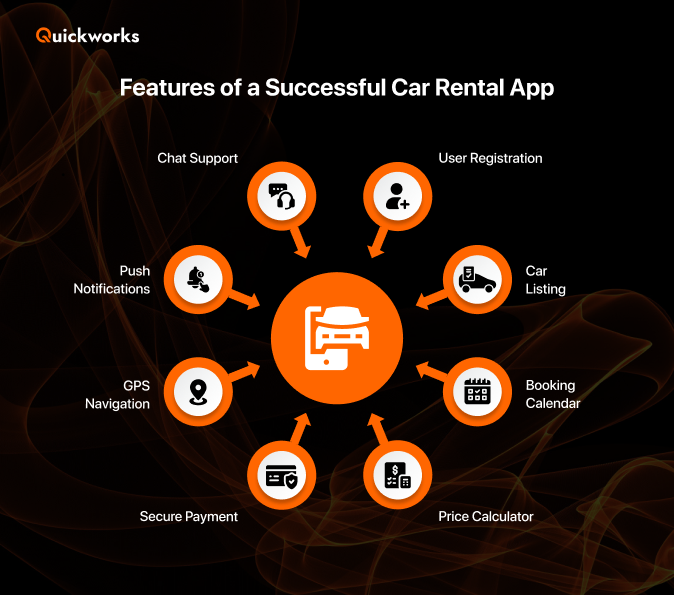
Key Features Required in a Car Rental App Like Turo
Features should exist for a reason. Each one should reduce friction, increase trust, or improve revenue. When entrepreneurs understand why each feature exists and how it supports trust and scale, decisions become clearer.
Build these foundations well, and everything else becomes easier to grow.
User Onboarding and Verification
This is where trust begins. A serious car rental platform verifies identity, driving licenses, and payment methods early in the journey. The smoother this process feels on the surface, the more users complete sign up. At the same time, the stricter it is behind the scenes, the fewer disputes you deal with later. For entrepreneurs, this is not optional. Weak verification directly leads to higher insurance costs, fraud cases, and platform risk.
Vehicle Listing and Host Controls
This is where supply quality is shaped. Car owners need an easy way to list vehicles, upload documents, set rules, and control availability. When hosts feel in control, they stay active. When listing tools are confusing, supply drops. A strong platform gives hosts freedom while quietly enforcing standards that protect renters.
Real-Time Availability and Pricing Logic
This is where reliability is tested. Availability must update instantly across all users. Double bookings or outdated calendars erode trust fast. Pricing logic also matters. Hosts want flexibility, but renters want clarity. The platform’s role is to balance both without constant manual intervention.
Booking Flow and Payments
This is where revenue is either earned or lost. A good booking experience answers simple questions clearly. What am I paying? And what happens if plans change? Payments should handle deposits, refunds, commissions, and taxes without confusion. For entrepreneurs, every extra step here directly affects conversion rates.
Insurance and Protection Handling
This is where platforms survive real-world usage.
Accidents, damages, and disputes are part of the business. A car rental app like Turo must integrate protection plans clearly, so both hosts and renters understand coverage before booking. This reduces conflict and keeps customer support manageable as the platform scales.
Reviews and Ratings
Two-way reviews hold both hosts and renters accountable. They are not just social proof. They quietly train users to behave better. Platforms with visible, fair review systems see fewer complaints and higher quality listings as the marketplace matures.
Admin Control and Oversight
This is where entrepreneurs stay in control. Admins need full visibility into users, vehicles, bookings, payouts, and disputes. Without strong admin tools, even a popular platform becomes difficult to manage. For anyone planning growth, especially across regions, this feature determines whether scale feels manageable or chaotic.
AI Features in Car Rental Apps That Drive Real Growth
Dynamic Pricing Intelligence
This is where AI directly increases revenue. Instead of static pricing, AI analyzes demand, location, seasonality, and vehicle type to suggest optimal rates. Hosts earn more during high demand periods, renters still see market-aligned pricing, and the platform benefits from higher commissions without raising fees.
Demand Forecasting
AI helps predict peak periods, slow seasons, and regional demand shifts. Entrepreneurs use this insight to plan marketing, onboarding campaigns, and even expansion strategies. It turns guesswork into data-backed decisions.
Fraud Detection and Risk Scoring
AI models monitor booking behavior, payment patterns, and account activity to flag high-risk users early. This reduces chargebacks, fake accounts, and insurance claims. For founders, this feature protects margins more than any manual rule ever could.
Personalized Vehicle Recommendations
AI learns what users prefer and surfaces relevant vehicles instead of forcing them to browse endlessly. Returning users book faster, and the platform benefits from higher repeat usage without relying on discounts.
Smart Search Ranking
AI can rank listings based on availability, past performance, reviews, and booking likelihood. Good hosts get rewarded with visibility, renters get better options, and the marketplace stays healthy without manual curation.
Predictive Maintenance Insights
By analyzing trip frequency and usage patterns, AI can suggest maintenance timelines for professional hosts and fleets. Fewer breakdowns mean fewer refunds, complaints, and negative reviews, which directly protects platform reputation.
Automated Support and Dispute Triage
AI helps categorize issues, route disputes, and answer common questions instantly. This does not replace human support, but it reduces response time and operational load, especially as bookings increase.
Tech Stack for Car Rental App Development: What Each Technology Does and Why It Matters
When entrepreneurs ask about the tech stack for car rental app development, they are rarely asking for a list of tools. What they really want to know is this: what technology choices will keep my product stable, flexible, and scalable two or three years from now?
Every technology you choose affects cost, speed, security, and your ability to change direction later.
Frontend Technologies for iOS, Android, and Web
The frontend is what users touch. It shapes trust before a single booking is made.
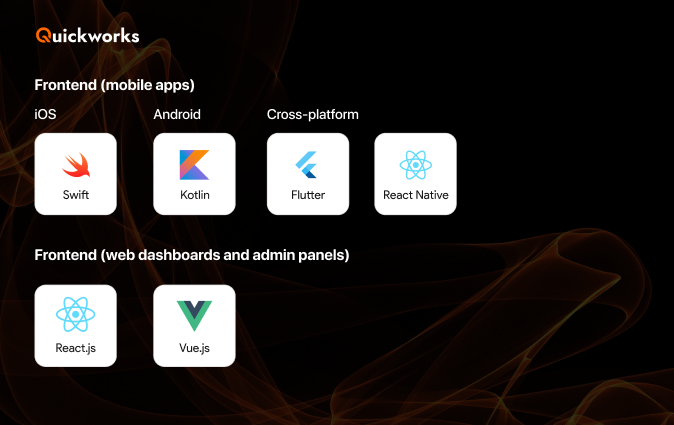
For mobile apps, most platforms use Swift for iOS and Kotlin for Android, or cross-platform frameworks like Flutter or React Native. Native development offers deeper device integration and long-term stability. Cross-platform development reduces time and cost, especially useful when launching an MVP or entering new regions quickly.
For web dashboards and admin panels, React.js or Vue.js are commonly used. They make complex interfaces manageable, which matters when admins need to review bookings, payouts, and disputes daily.
If the frontend feels slow, confusing, or inconsistent, users leave. If it is built on unstable technology, every update becomes expensive. The right choice balances speed to market with long-term maintainability.
Backend Frameworks and APIs
The backend is the brain of the platform. It handles bookings, pricing logic, payments, user roles, and data flow.
Popular backend frameworks include Node.js, Django, or Spring Boot. Node.js works well for real-time systems like availability updates and messaging. Django is often chosen for data-heavy platforms that need strong admin capabilities. Spring Boot suits enterprise environments with complex integrations.
APIs connect everything. Mobile apps, web apps, payment systems, and insurance partners all communicate through APIs. Clean API design makes future integrations easier, whether you are expanding to new countries or adding AI features later.
A poorly designed backend slows growth. Every new feature feels like a rewrite. A well-structured backend lets you adapt pricing models, add regions, or change workflows without breaking the system. This is why companies looking to build a car rental app like Turo often partner with experienced teams rather than experimenting internally.
Cloud Infrastructure and Hosting
Most modern car rental platforms run on cloud providers like AWS, Google Cloud, or Azure. These platforms allow you to scale resources based on demand.
During peak travel seasons, traffic spikes. During slower periods, usage drops. Cloud infrastructure adjusts automatically, so you only pay for what you use.
Hosting also includes databases, storage for vehicle images and documents, and monitoring tools that alert teams when something goes wrong.
Owning servers ties growth to fixed costs. Cloud hosting keeps operations flexible and predictable. It also supports faster expansion when entering new markets like Finland or Sweden, where user adoption can grow quickly once trust is established. This flexibility is one reason many enterprises work with an on demand car rental app development company in Finland or teams offering car rental app development services in Sweden.
Third-Party Integrations
No serious car rental platform operates in isolation.
You will need:
Payment gateways for cards and local methods
Identity verification services
Insurance and protection providers
Maps and GPS services
Notification systems for SMS and email
Each integration saves months of development and reduces risk. The key is choosing providers that are reliable in your target regions. Trying to build everything in-house increases cost and delays launch. Smart integrations let you focus on the marketplace logic instead of reinventing infrastructure.
Backend Architecture for a Scalable Car Rental App
The backend architecture for a car rental app determines whether growth feels manageable or painful. This is where long-term thinking matters most. echnology choices are business decisions. The right tech stack for car rental app development supports growth without locking you into expensive paths. The right backend architecture protects trust, revenue, and operational control.
Whether you want to make a car rental app like Turo, partner with a Turo clone app development company in Austria, or hire car rental app developers for a custom build, clarity matters more than complexity.
Microservices vs Monolithic Architecture
A monolithic architecture keeps everything in one system. It is simpler to build initially and works well for early-stage MVPs.
A microservices architecture breaks the platform into independent services, such as bookings, payments, user management, and notifications. Each service can scale independently.
For early launches, monolithic systems reduce complexity. As platforms grow across regions or add advanced pricing and AI features, microservices offer more flexibility. Starting simple is fine. Staying simple forever is risky. Many successful platforms begin monolithic and gradually move toward microservices as demand grows.
Role-Based Access Control
A car rental platform has many types of users. Renters, hosts, support teams, finance teams, and administrators all need different access levels.
Role-based access control ensures each user only sees what they are allowed to see. A host cannot access admin financial data. A support agent cannot modify pricing rules without permission. As teams grow, access mistakes become expensive. Strong role-based controls protect data and prevent operational errors that damage trust.
Data Security and Compliance
Car rental platforms handle sensitive data. Identity documents, payment information, and location data all fall under strict regulations in Europe.
Backend systems must support encryption, secure storage, and audit logs. Compliance with GDPR and local data laws is not optional.
Security issues destroy platforms faster than bad design. Working with a Turo clone app development company Austria or teams offering Turo clone app development services in Sweden often helps because they already understand regional compliance requirements.
Scalability and Performance Planning
Scalability is not about traffic alone. It is about handling more bookings, more users, more disputes, and more integrations without slowing down. Caching systems reduce load on databases. Load balancers distribute traffic. Monitoring tools track performance in real time.
Performance problems rarely appear at launch. They appear when growth finally arrives. Planning for scale early avoids costly rebuilds later.
How Much Does It Cost to Build a Car Rental App Like Turo?
When founders ask about the cost to build a car rental app like Turo, what they are really asking is this- What am I paying for, and what can I safely delay?
The honest answer is that cost is shaped less by design polish and more by logic. Every rule you add increases development effort. All integration adds testing time. Every country you support adds compliance work. That is why two Turo-style apps can differ wildly in price.
What Actually Drives Development Cost
The biggest cost driver is not screens. It is workflows. For example, letting a user book a car sounds simple. But behind that action sit availability checks, pricing rules, payment holds, insurance logic, cancellation policies, and dispute handling. Each layer adds development hours.
Other major cost factors include
Number of user roles like renters, hosts, admins, and support teams
Real-time features such as messaging, live availability, or dynamic pricing
Third-party dependencies like insurance providers, payment gateways, and ID verification tools
Regional regulations, especially in Europe where compliance matters
Payments alone are not just Stripe or PayPal. You need split payouts, refunds, holds, dispute handling, and transaction tracking. Add insurance APIs, document uploads, background checks, and analytics, and the scope grows quickly. A Turo clone solution with minimal integrations stays affordable. A fully custom platform with deep partnerships costs more, but it also unlocks long-term defensibility.
Who builds your app matters the most.
A lean team with experienced car rental app developers can ship an MVP faster than a large junior-heavy team. Fewer handoffs. Cleaner decisions. Less rework. Most founders working with a focused car rental app development company see faster results than those coordinating multiple vendors. Speed saves money. Delays quietly burn it.
An MVP gives you leverage.
Instead of guessing what users want, you watch how they behave. Which cars get booked. Where users drop off. What hosts complain about. That data shapes your next investment. This is where a white-label or Turo clone app development services approach makes sense. Starting at $4K, you get a working system that already understands the marketplace logic. You test demand before committing to heavy customization.
Founders who skip MVPs often overbuild features nobody uses. Founders who launch early make smarter decisions later.
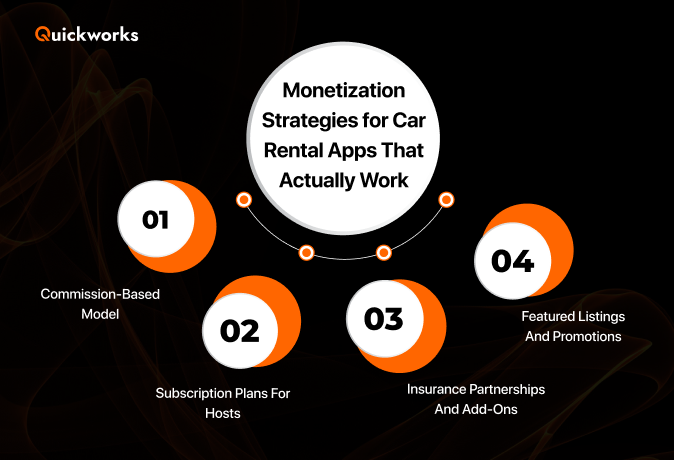
Monetization Strategies for Car Rental Apps That Actually Work
A car rental platform only survives if monetization is aligned with usage. The revenue model of Turo is a good reference point, not because it is complex, but because it is fair.
Commission-Based Model
This is the backbone of most successful platforms. The platform earns a percentage from each booking. Hosts earn money, renters get value, and the platform grows as activity increases. The key is transparency. Users should always understand who pays what and why.
This model scales well and keeps incentives aligned. It is also why it is commonly baked into Turo clone app development services.
Subscription Plans for Hosts
Subscriptions work well for high-volume hosts. Professional car owners or fleet operators pay a monthly fee in exchange for lower commissions, better visibility, or added tools. This creates predictable revenue for the platform while rewarding serious suppliers. The mistake many platforms make is forcing subscriptions too early. Subscriptions work best once hosts see consistent value.
Insurance Partnerships and Add-Ons
Insurance is not just protection. It is revenue. Platforms partner with insurers to offer different coverage levels. Renters and hosts choose what suits them, and the platform earns a share. This also reduces disputes and support costs, which indirectly protects margins. In markets like Austria or Sweden, insurance integration is often a deciding factor in platform trust.
Featured Listings and Promotions
Visibility is valuable real estate. Hosts are often willing to pay for featured placement during peak seasons or special events. When done carefully, this boosts platform revenue without hurting user experience. The key is balance. Promotions should feel optional and fair, not like pay-to-win mechanics.
Cost and monetization are not separate conversations.
A platform built without a clear revenue plan often overspends on features that never pay back. A platform obsessed with monetization too early often struggles with adoption.
Build something people trust first. Monetize your car rental app thoughtfully. Scale it when the numbers tell you to. That is how platforms last.
Turo Clone App Development Services: When and Why to Choose Them
Not every business needs to reinvent the wheel. Sometimes, the smartest move is to start with something proven and shape it to your market. That is where Turo clone app development services make sense.
A clone does not mean a cheap copy. It means a ready-made foundation that already understands how peer-to-peer car rental works.
What a Turo Clone Really Includes
A solid Turo clone solution comes with the core marketplace logic already built. That typically includes user onboarding, vehicle listings, availability management, booking flows, payments, host payouts, reviews, and an admin dashboard. These are not features you want to experiment with. They either work or they break trust.
For founders looking to develop a car rental app like Turo, this baseline removes months of trial and error.
You are not paying for ideas. You are paying for stability.
Customization vs Off-the-Shelf Solutions
This is where many founders get confused. A white label solution is not meant to stay white label forever. Think of it as your starting point. You launch with proven flows. Then you customize what matters most to your business.
For example, a startup entering Austria might customize insurance logic and compliance workflows. A company targeting Sweden might focus more on EV support and subscription models.
Turo clone app development in Austria often works best when the core stays intact, and the rules, pricing, and compliance layers are customized locally. That balance keeps cost under control while still letting you stand out.
Faster Time-to-Market Benefits
Speed is not just about launching early. It is about learning early. Using white label solutions car rental app development services allows you to go live in weeks instead of months. That means you start collecting real data. Real bookings. Real feedback.
Founders who wait too long often build features users never asked for. Founders who launch faster make sharper decisions. If your goal is validation, partnerships, or early revenue, a clone-based approach gives you a strong head start.
Why Choose Quickworks to Build a Car Rental App Like Turo?
Building a marketplace is not just about code. It is about understanding behavior, incentives, and scale. That is where Quickworks comes in.
Experience with On-Demand and Marketplace Platforms
Quickworks has spent years building on demand platforms where timing, trust, and transactions matter. From logistics to rentals to service marketplaces, we understand what breaks when platforms grow and what needs to be solid from day one.
If you want to build a car rental app like Turo, you need more than screens. You need workflows that survive real users and real volume.
Custom Development Over Template Thinking
We do not push one-size-fits-all builds. Some clients start with a Turo clone solution and customize from there. Others go fully custom because their business model demands it. Our role is to guide that decision honestly.
If a clone makes sense, we say so. If custom logic will save you pain later, we design for that upfront. This is how serious platforms are built.
Built for Scale, Not Just Launch
Many apps work fine at 100 bookings. They fail at 10,000. Quickworks designs platforms with growth in mind. From architecture decisions to data handling, everything is built to scale without constant rewrites.
We also integrate AI where it actually adds value, such as pricing logic, risk detection, and operational insights. Not hype, but tools that reduce costs and improve control.
Global Delivery, Local Understanding
We work with clients across the USA, Middle East, and UAE, and collaborate with businesses that need reliable car rental app development services across regions.
Whether you are a car rental app development company expanding your offering or an enterprise planning regional rollout, we understand how to adapt platforms to different markets.
We also help teams hire iOS and Android developers when long-term in-house growth makes sense, instead of locking clients into endless outsourcing.
Closing Thoughts
Building a successful car rental platform is not about copying Turo. It is about learning from what worked and adapting it to your audience, your region, and your goals.
If there is one thing we have learned after working with marketplace founders, it is this. The technology is rarely the hardest part. The real challenge is deciding what to build first, how much to invest, and how to avoid expensive mistakes once users start coming in.
Whether you plan to build a car rental app like Turo from scratch or start with a Turo clone solution, success depends on clarity. On demand car rental app development only works when the platform is designed for real usage, not just a demo launch. Features need to earn their place. Architecture needs to scale quietly. Monetization should feel fair, not forced.
That is exactly where experienced guidance makes a difference. If you want honest answers, realistic timelines, and a platform built for growth, let’s talk.
Frequently Asked Questions(FAQs)
A basic MVP or white-label Turo clone solution can be launched in a few weeks. A fully custom platform with advanced workflows, AI features, and regional compliance usually takes several months. Speed improves significantly when you start with a proven base.
The cost to build a car rental app like Turo varies widely. An MVP or clone-based solution can start low at $4,000, while custom enterprise platforms cost more due to integrations, compliance, and scalability requirements. The key is aligning spend with validation goals.
Trust and usability matter most. Strong onboarding, vehicle availability management, secure payments, reviews, host payouts, and admin controls are essential. Fancy features come later. Platforms that get the basics right grow faster.
Yes, in most cases. A clone gives startups speed, stability, and lower upfront risk. It allows founders to test the market before investing heavily in custom features. Many successful platforms start this way.
Most rely on proven monetization strategies for car rental apps such as commission per booking, host subscriptions, insurance add-ons, and promoted listings. The best platforms combine two or three models without overloading users.
Quickworks understands marketplaces at a business level, not just a technical one. We help you decide what to build, what to delay, and how to scale without rewriting your platform every year.
Definitely. We support scaling, performance optimization, feature expansion, and long-term product strategy. Many clients treat us as an extended product team, not just a development vendor.
Chubby & Enthusiastic! Proficient in marketing research and statistical analysis. Highly creative with my thoughts about the latest mobile and web advancements. Dwell up the tech world with my glasses :)
Subscribe to Get Search Free Updates on Upcoming Tech Stories.
You Tell Us the Destination, and We Will Lead the Way for You
We Are a Global Leader in New Age Digital Product Development.




 January 20, 2026 Last Updated: June 23, 2026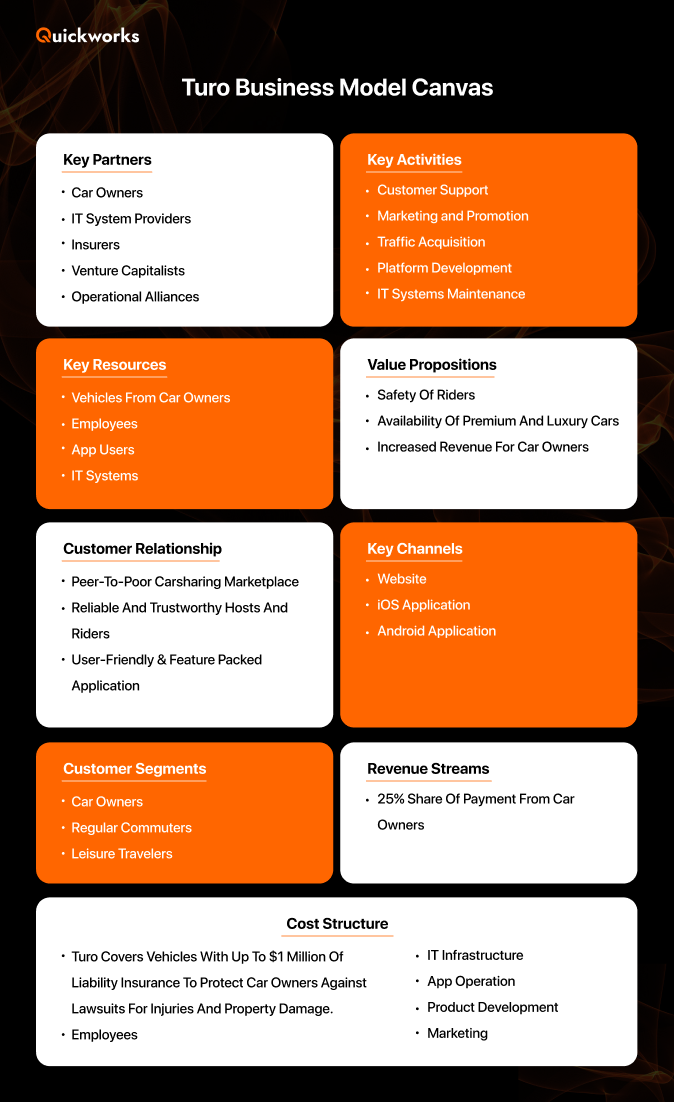




 Phone Number:
  Email: