How to Build a Food Delivery App Like Foodora: Features, Cost, and Tech Stack
782 Views
17min
January 19, 2026
Last Updated: January 21, 2026
Boost Your Businesswith AI Powered Products!
Enter your details for expert insights and a personalized action plan.
Share
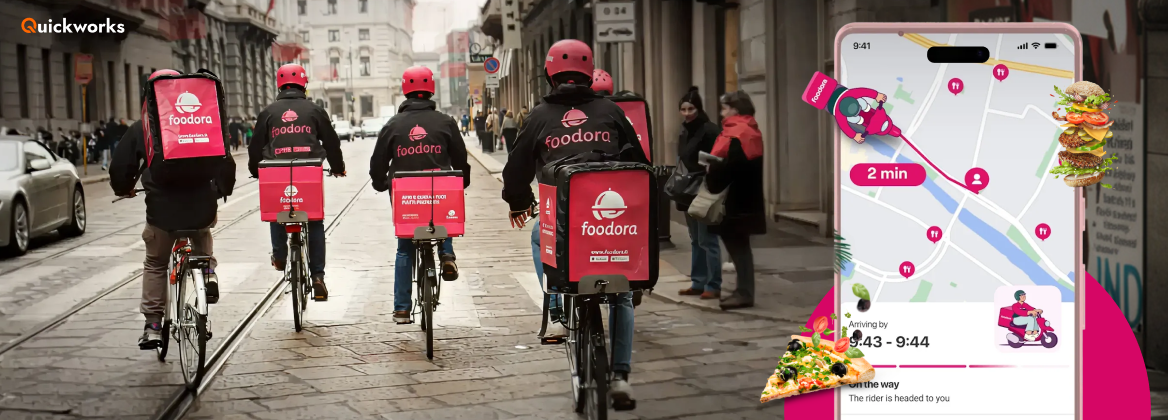
Think about a normal day. Somewhere between meetings, traffic, and late evenings, you probably reach for your phone and order food without thinking twice. For millions of people, this habit is already locked in. Apps like Foodora quietly changed their behavior. Ordering food became routine, almost automatic.
Restaurants now depend on delivery platforms for visibility and volume. Delivery partners rely on them for consistent income. Customers rely on them for convenience. A well-built food delivery app sits right in the middle of all three, quietly making the system work.
The market reflects this change clearly. By 2026, the global online food delivery market is expected to exceed $300 billion. Most of that growth is coming from mobile-first users. People don’t want to call restaurants anymore. They want a few taps, live tracking, and reliable delivery.
If you’re an entrepreneur considering this space, building a food delivery app like Foodora is about stepping into a system people already trust. This guide breaks it down in practical terms.
How can Foodora clone app development services help you launch faster?
Why Build a Food Delivery App Like Foodora?
Food delivery is one of the few digital businesses where value flows in multiple directions at the same time. Customers save time. Restaurants get more orders without expanding their physical footprint. Delivery partners get flexible, steady work. When a platform balances these needs well, growth follows naturally.
The numbers tell the same story.
->By 2026, more than 45 billion food delivery orders are expected worldwide. That’s a huge audience waiting for a good app.
->Multi-vendor food delivery app solutions can increase restaurant revenue by up to 30 percent by giving restaurants access to many more customers.
->Urban consumers order food on average 3–4 times per week. That’s repeat business built in.
->Around 60% of users are willing to try a new restaurant if it’s available on a reliable delivery app.
For restaurants, joining a mobile app for a food delivery startup removes the need to manage their own delivery logistics. While for customers, it offers variety and convenience. For delivery partners, it creates a steady flow of work without fixed schedules.
This is why many founders choose to work with a food delivery app development company instead of experimenting alone. The right partner helps you avoid early mistakes and build something scalable from day one. And if speed matters, Foodora clone app development services can give you a proven foundation while still leaving room to shape your own brand and business model.
Step-by-Step Guide to Create a Food Delivery App Like Foodora
If you want to build a food delivery app like Foodora, the first thing to understand is this: the real work starts long before development begins. This isn’t just about choosing features or finalizing a tech stack. It’s about building a system people rely on when they’re hungry, busy, or short on time.
Think about how restaurants actually operate. They don’t open doors without knowing the neighborhood, the menu demand, or the staff they need. Developing a multi-vendor food delivery app solution works the same way. Planning comes first. Everything else follows.
Step 1: Market Research and Planning
Before you commit to development, get clear on your audience and location. Are you targeting professionals ordering lunch, families ordering dinner, or students ordering late at night? Each group behaves differently.
Look at existing food delivery apps in your target region. Don’t just study their strengths. Pay attention to what they overlook. Maybe certain cuisines are missing, delivery times are inconsistent or smaller restaurants struggle to get visibility. These gaps often become the strongest reasons users choose a new app.
Step 2: Define Features and User Roles
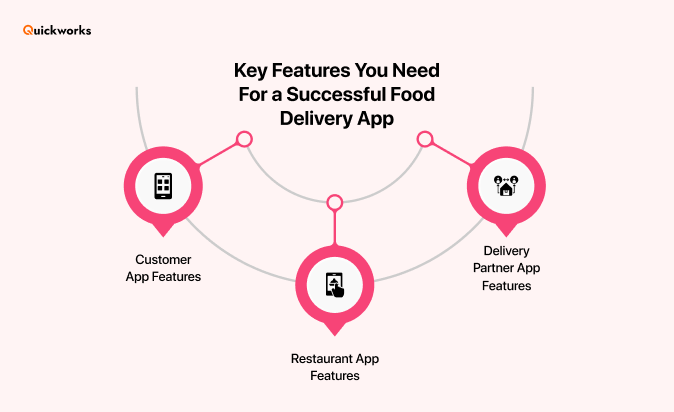
A food delivery platform is not a single product. It’s three systems working together.
That usually translates into:
->A customer app for browsing, ordering, and live tracking
->A restaurant app for menu updates, order handling, and insights
->A delivery partner app for navigation, task acceptance, and payouts
When founders try to add everything at once, things get messy. Start with essential food delivery app features and expand only after the basics work well.
Step 3: Choose the Right Development Approach
This is where many early decisions impact time and cost. You can build everything from scratch, use a white label food delivery app solution, or work with Foodora clone app development services. Each option has trade-offs. Building from scratch offers full flexibility but takes longer and costs more. Clone or white-label solutions help you move faster and reduce early risk.
If your goal is to test the market quickly, starting with a clone approach often makes sense. You can always customize later once the business model proves itself.
Step 4: Design the User Experience
Good design doesn’t try to impress. It tries to stay out of the way. Users should move through the app without thinking. Menus should be easy to scan. Checkout should feel quick. Tracking should feel reliable. This is where many food delivery apps quietly lose users.
Not because they look bad, but because they feel slow or confusing. When you develop a food delivery app like Foodora, usability matters more than decoration.
Step 5: Build the MVP
An MVP isn’t about cutting corners. Start with login, search, ordering, payments, and basic delivery tracking. That’s enough to learn how real users behave. Most successful platforms started small and improved based on data, not assumptions. The MVP gives you clarity without overspending.
Step 6: Testing and Launch
Before launch, test every flow carefully. Orders, payments, notifications, and delivery updates all need to work smoothly. Launch in a limited area first. Watch how users interact with the app. Where do they hesitate? Where do they drop off? Early feedback is far more valuable than adding more features too soon.
Step 7: Scaling and Continuous Improvement
Once the core system works, scaling becomes practical. Add new cities. Onboard more restaurants. Expand your delivery network. Advanced features like AI recommendations, loyalty programs, or subscriptions make sense only after your foundation is stable.
Key Features You Need For a Successful Food Delivery App
When you decide to build a food delivery app like Foodora, features stop being a checklist and start becoming business decisions. Every feature either removes friction or adds it. The apps that succeed are usually the ones that get the basics right for all three sides of the marketplace: customers, restaurants, and delivery partners. A strong food delivery app feature set balances speed, clarity, and reliability.
⭐Customer App Features
Customers don’t think in terms of features. They think in terms of convenience. If ordering food feels slow or confusing, they won’t come back. Simple as that.
Smart Search and Filters
Users should find what they want quickly. Filters by cuisine, ratings, delivery time, or budget matter more than flashy layouts. Someone looking for sushi on a Friday night doesn’t want to scroll endlessly.
Real-Time Order Tracking
This is about trust. Seeing the order move from preparation to pickup to delivery reduces anxiety and cuts down support queries. Transparency keeps users calm.
Multiple Payment Options
Cards, wallets, UPI, and cash on delivery all matter depending on the market. The fewer barriers at checkout, the higher the chances the order actually gets placed.
Reviews and Ratings
People trust other people more than apps. Reviews help customers decide and push restaurants to maintain quality. It’s a quiet but powerful feedback loop.
Favorites and Reorders
Most users reorder from the same places. Letting them save favorites or repeat past orders makes the experience faster and more personal.
Offers and Discounts
Promotions aren’t just about price cuts. They help first-time users place that initial order and encourage existing users to try new restaurants.
⭐Restaurant App Features
Restaurants care about one thing above all else: smooth operations. If the app complicates their workflow, they’ll disengage.
Menu Management
Real-time updates for items, pricing, and availability prevent cancellations and unhappy customers.
Instant Order Notifications
Orders need to be seen and acknowledged immediately. Delays here ripple through the entire delivery chain.
Inventory Tracking
Knowing what’s running low helps restaurants plan better and avoid last-minute issues.
Sales Insights
Understanding peak hours and popular dishes helps restaurants make smarter decisions, from staffing to menu tweaks.
Customer Feedback Access
Direct access to reviews allows restaurants to respond, improve, and protect their reputation.
Promotion Controls
Restaurants should be able to run their own deals to attract new customers or boost slow periods.
⭐Delivery Partner App Features
Delivery partners keep the system moving. Their app needs to be reliable, clear, and respectful of their time.
Route Optimization
The fastest route saves time, fuel, and frustration. This directly impacts delivery speed and partner satisfaction.
Earnings Overview
Clear daily, weekly, and monthly earnings help partners plan better and stay motivated.
Flexible Order Acceptance
Partners should have control over which orders they accept based on distance or availability.
Real-Time Notifications
Instant updates ensure no missed deliveries or confusion during peak hours.
Delivery History
Past order records help resolve disputes and track incentives.
In-App Communication
Quick chat with customers or restaurants reduces misunderstandings and delivery delays.
Advanced Features That Set Your App Apart
Basic features help you launch. Advanced features help you compete and scale. This is where a food delivery app development company can really add value by thinking beyond the MVP. At Quickworks, AI-powered features are available starting at just $4K, which makes advanced tools accessible even for early-stage startups.
👉AI-Powered Recommendations
Suggesting dishes based on past orders or time of day feels helpful when done right. It nudges users toward quicker decisions and higher order value.
👉Predictive Analytics
Anticipating peak hours or popular items helps restaurants prepare better and avoid delays. It also improves overall platform efficiency.
👉Loyalty Programs
Points, rewards, or exclusive offers give users a reason to return. Retention is usually cheaper than acquisition, and loyalty programs support that.
👉Smart Push Notifications
Well-timed updates about offers or order status keep users engaged. Poorly timed ones push them away. Balance matters here.
👉Live Delivery Tracking
Showing the delivery partner’s real-time location builds confidence and reduces support calls.
👉Dynamic Pricing
Adjusting delivery fees based on demand, distance, or time helps maintain profitability without surprising users.
👉In-App Chatbot Support
Automated responses to common questions reduce pressure on support teams and give users quick answers when they need them.
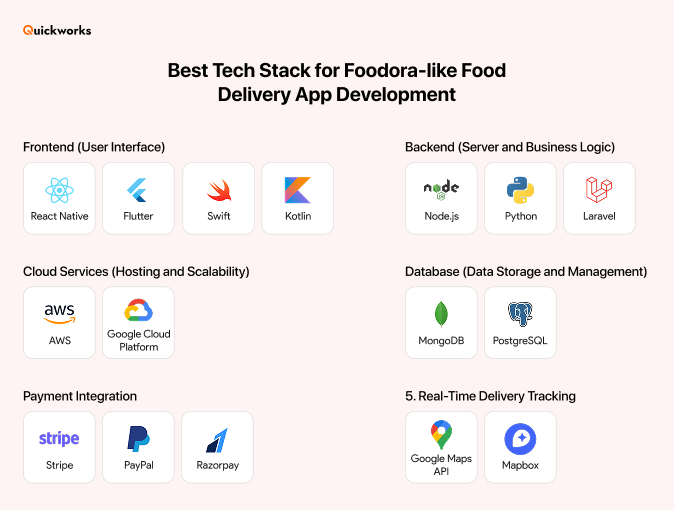
Best Tech Stack for Foodora-like Food Delivery App Development
When you plan to develop a food delivery app like Foodora, the technology stack you choose quietly decides how successful that app can become. Not on day one, but six months later. Or two years later, when orders spike, new cities are added, and users expect everything to work instantly.
The right tech stack affects speed, stability, scalability, and long-term cost. A poor choice can mean constant fixes and rewrites. A smart one grows with your business. This is why working with an experienced food delivery app development company matters. They don’t just pick popular tools. They pick what fits your product, market, and growth plans.
Below is a practical look at the tech stack most teams use for food delivery app development in 2026, and why.
1. Frontend (User Interface)
The frontend is where users form their first impression. If the app feels slow or confusing, they won’t wait around.
◼️React Native
One of the most common choices for food delivery apps. It allows you to build both iOS and Android apps using a single codebase. This reduces development time and cost while still delivering a smooth experience.
◼️Flutter
Flutter is popular for its flexibility in UI design and fast performance. It’s a good option if you want more control over visuals without maintaining separate apps.
◼️Native iOS (Swift) and Android (Kotlin)
If performance is your top priority, native development still wins. Apps built in Swift and Kotlin tend to feel more stable and responsive, especially at scale. Many large platforms still prefer native for long-term reliability.
2. Backend (Server and Business Logic)
The backend is the engine of your app. It handles orders, payments, notifications, user accounts, and communication between customers, restaurants, and delivery partners.
◼️Node.js
Known for speed and efficiency, especially when handling many users at once. It’s a strong choice for real-time features like order tracking and notifications.
◼️Django (Python)
Django works well for apps that need solid security and clean structure. It’s often used when analytics or AI features are part of the roadmap.
◼️Laravel (PHP)
Laravel is reliable for complex workflows and third-party integrations. It’s easy to maintain and works well for multi-vendor food delivery platforms.
3. Database (Data Storage and Management)
Databases store everything your app depends on. Orders, menus, user profiles, reviews, and delivery history.
◼️MongoDB
Best for flexible data like chat messages, logs, and recommendation systems. It works well when your data structure evolves over time.
◼️PostgreSQL
Ideal for structured data such as transactions, restaurant listings, and user accounts. It’s stable, accurate, and widely trusted for financial data.
4. Cloud Services (Hosting and Scalability)
Cloud platforms allow your app to scale without worrying about servers crashing during peak hours.
◼️AWS (Amazon Web Services)
One of the most widely used cloud platforms for food delivery apps. It supports auto-scaling, secure storage, and high availability.
◼️Google Cloud Platform
Strong in analytics and AI-driven features. It’s often chosen when data insights and predictive systems are a core focus.
5. Real-Time Delivery Tracking
Live tracking is no longer optional. Users expect to see exactly where their food is.
◼️Google Maps API
The most reliable option for navigation, route planning, and real-time tracking.
◼️Mapbox
Offers more customization and flexibility in map design. It’s often chosen for cost control and tailored map experiences.
6. Payment Integration
Payments are where trust is either built or lost. They must be fast, secure, and familiar to users.
◼️Stripe
Supports cards, wallets, and international payments. Known for reliability and developer-friendly APIs.
◼️PayPal
Trusted globally and useful for cross-border transactions.
◼️Razorpay
Popular in India and nearby regions. Supports UPI, cards, and local payment methods smoothly.
How Much Does It Cost to Develop a Food Delivery App in 2026?
When founders plan to build a food delivery app like Foodora, the conversation quickly turns to budget. What is the actual food delivery app development cost in 2026? And where does the money really go?
The truth is, there’s no flat price tag. The cost to develop a food delivery app depends on how complex the product is, which platforms you target, and whether you’re starting with an MVP or a full multi-vendor ecosystem. A simple app meant for testing demand costs far less than a polished Foodora-like platform operating across multiple cities.
Understanding the breakdown helps you control spending instead of reacting to it later.
AI recommendations, loyalty programs, push notifications, analytics, dynamic pricing
$20k – $30k+
Enterprise
Multi-vendor setup, full customization, advanced analytics, AI-powered features, scalable architecture
$30k+
How to Cut Down Food Delivery App Development Cost?
The biggest mistake founders make is trying to build everything at once. More features don’t automatically mean more users. In fact, they often slow things down.
The smartest way to manage food delivery app development pricing is to build in stages. Start with an MVP that validates demand. Add advanced features only after users start ordering, restaurants stay active, and delivery partners remain engaged. Many founders overspend early by building features they think users want. In reality, users care more about fast ordering, reliable delivery, and smooth payments.
Everything else can wait.
When planned carefully, the cost to build a food delivery app like Foodora becomes an investment that grows with your business instead of a financial risk. The goal isn’t to minimize cost at all costs. It’s to spend where it actually matters.
White Label vs Custom Food Delivery App Development: What Should You Start With?
At some point, every founder building a food delivery app faces the same question.
Should I build everything from scratch, or start with a white label solution and evolve later?
There’s no universal answer, but experience shows a clear pattern. Most successful platforms didn’t start perfect. They started fast, learned from real users, and improved step by step. That’s why, for most startups and even mid-sized businesses, starting with a white label food delivery app makes more sense than jumping straight into custom development.
Let’s break it down in plain terms.
Aspect
White Label Food Delivery App
Custom Food Delivery App
Time to Launch
2–4 weeks
4–8 months or more
Initial Cost
Low, predictable
High and variable
Risk Level
Lower, already tested
Higher, many unknowns
Customization
Moderate, practical
Unlimited but complex
Best For
Startups, pilots, fast launches
Mature businesses with clear scale
Learning from Users
Immediate
Delayed until launch
Maintenance
Mostly handled by provider
Fully your responsibility
What Does White Label Mean in Food Delivery Apps?
A white label food delivery app is a ready-built platform with core features already tested in real-world scenarios. You get the full system customer app, restaurant app, delivery partner app and admin panel but branded with your logo, colors, and business rules.
Think of it like renting a fully equipped kitchen before opening your own restaurant. You focus on the menu and customers instead of buying every appliance on day one. Custom development, on the other hand, means designing and building everything from zero. You get total control, but you also take on more risk, cost, and time.
Here’s the honest truth most founders learn the hard way.
You don’t really know what your users want until they start using the app. White label solutions let you test your idea in the real market. You see which restaurants perform well, where deliveries get delayed, which features people ignore, and what actually drives repeat orders. That insight is worth more than any planning document.
Starting custom too early often means spending months building features that users don’t care about yet. White label also helps you control food delivery app development cost. Instead of burning budget on long development cycles, you invest in marketing, restaurant onboarding, and delivery operations the things that actually make or break a food delivery business.
When Does Custom Development Make Sense?
Custom development becomes valuable once you’ve validated your model. If you’re handling thousands of orders daily, expanding into multiple cities, or introducing a unique business model like cloud kitchens, subscription meals, or enterprise partnerships then custom development gives you deeper control.
Many successful platforms follow this path: Start white label, learn fast, then go custom where it truly matters.
This is why many entrepreneurs choose Foodora clone app development services or a white label multi-vendor food delivery app solution as their first step. It’s not a shortcut. It’s a smarter starting point.
Foodora Clone App Development Services: What They Include?
For many founders, the idea of building everything from scratch feels risky. That’s why Foodora clone app development services are often the starting point. But the term clone can be misleading.
What a Clone App Actually Means-
A clone app is not a direct copy. It’s a proven structure. It replicates the core workflow of a successful platform like Foodora while allowing customization in branding, layout, and features. Think of it like a franchise model. The operations are tested, but the business is still yours. This approach reduces uncertainty, especially for a mobile app for food delivery startup entering a competitive market.
Launching the app is only the beginning. As your business grows, you’ll need updates, fixes, and new features. Clone-based solutions make this easier because the foundation is stable. You can evolve without rebuilding everything from scratch, whether that means adding new restaurant categories or expanding into new cities.
Why This Approach Speeds Up Launch-
Starting from zero sounds appealing, but it often slows things down. Using a clone or white-label solution gives you a tested base. That means faster launch, lower early food delivery app development cost, and fewer surprises. You focus on branding, operations, and growth instead of basic technical hurdles. Many founders hesitate here, thinking clones limit creativity. In reality, they often enable smarter decisions early on.
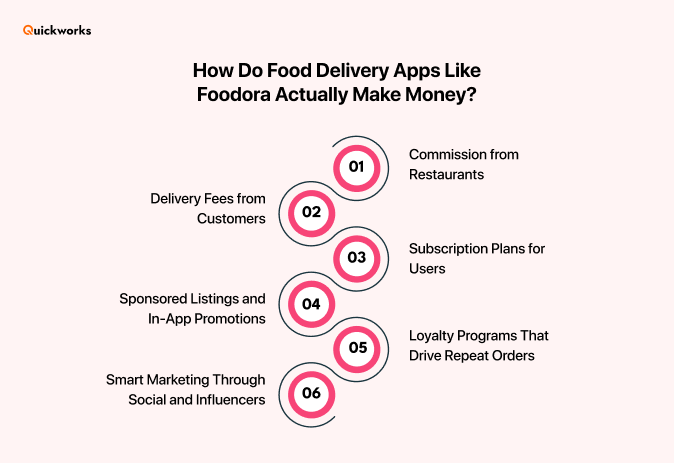
How Do Food Delivery Apps Like Foodora Actually Make Money?
Foodora didn’t start as a giant platform with every revenue stream figured out. In its early days in Berlin, the focus was simple. Partner with restaurants people already loved, charge a fair commission, and make delivery reliable. Revenue came later in layers. First commissions. Then delivery fees. Much later, subscriptions and loyalty programs.
That approach is worth paying attention to.
When founders ask how to monetize a food delivery app, the real answer is not one method, but a combination that grows with your platform. If you’re planning to build a food delivery app like Mr.D, monetization should be part of the product thinking from day one, not an afterthought. A Foodora clone app development company can help wire these models into the app early so you’re ready to earn as soon as users start ordering.
Here’s how most successful platforms actually do it.
1. Commission from Restaurants
This is the backbone of most food delivery businesses. Restaurants pay a percentage on every order they receive through your app. It might be 10 percent, 15 percent, or more depending on the market.
For example, if a customer places a $15 order, your platform keeps a small cut. The restaurant still wins because they get orders they wouldn’t have received otherwise. You win because revenue scales naturally with volume. When restaurants grow, you grow.
2. Delivery Fees from Customers
Delivery fees are simple and effective. Customers expect them, as long as they feel fair. Some apps keep the fee fixed. Others adjust it based on distance, time of day, or demand. During peak dinner hours or rainy evenings, a slightly higher fee is usually accepted. Many platforms also waive delivery fees for loyal or subscribed users, which helps retention.
3. Subscription Plans for Users
Subscriptions create stability. Apps like Zomato Gold and Uber One use this model well. Users pay a monthly or yearly fee and get benefits like free delivery, exclusive discounts, or priority support. Even if a user orders less in a particular month, you still earn predictable revenue. For a growing platform, this consistency matters.
4. Sponsored Listings and In-App Promotions
Once your app has traffic, visibility becomes valuable. Restaurants are willing to pay to appear higher in search results or to promote special dishes.
A new cafe might sponsor lunch-hour placement for a week. A cloud kitchen might promote weekend offers. These promotions don’t disrupt the user experience if done carefully, and they add a strong secondary revenue stream.
5. Loyalty Programs That Drive Repeat Orders
Loyalty programs are less about direct revenue and more about long-term value.
Offering points for every order or rewards after a certain spend encourages users to stick with your app instead of switching to competitors. Over time, repeat users spend more and order more frequently. That compounds your commission and delivery fee revenue without extra marketing spend.
6. Smart Marketing Through Social and Influencers
Marketing itself isn’t a monetization method, but it fuels all of them. Many early-stage platforms grow by partnering with local food bloggers or micro-influencers instead of running expensive ads. A single reel showing popular restaurants on your app can drive real orders in a weekend. The key is targeting the right audience, not shouting the loudest.
→A Simple Way to Think About Monetization
Trying to do everything on day one often backfires. Start with commissions and delivery fees. Add subscriptions once users trust your platform. Introduce ads and promotions only when traffic justifies it. The best food delivery app development companies design monetization to evolve naturally as the platform grows.
Why Is Quickworks the Right Partner for Your Food Delivery App?
When you plan to build a food delivery app like Foodora, the technology matters, but the partner you choose matters just as much. A strong food delivery app development company doesn’t just write code. It helps you make better decisions early, avoid expensive detours, and launch with clarity.
At Quickworks, we work with founders who want to create a practical, scalable multi-vendor food delivery app solution. Some want to move fast with a tested product. Others want full control and customization. Our role is to support both paths without forcing one approach on every business.
✅Launch Fast with a White Label or Build Fully Custom
Many startups choose to start with a white-label food delivery app because it reduces time, cost, and risk. Our white-label solutions allow you to launch a Foodora-style platform in weeks with your own branding, workflows, and core food delivery app features already in place.
For businesses that need deeper flexibility, we also build fully custom apps with complete source code ownership. This approach is ideal if you plan to scale aggressively or introduce unique business logic over time. Both options are built to grow, not just to launch.
✅Affordable Entry for Early-Stage Startups
The food delivery app development cost can feel overwhelming, especially at the idea stage. That’s why our plans start at $4K. It gives founders a realistic way to test the market with a real, working product instead of spending months on development before seeing user response.
✅Custom Development Where It Adds Real Value
Not every app needs everything on day one. When your idea demands more than standard functionality, our team steps in with custom development. This could include AI-driven recommendations, dynamic delivery pricing, or advanced restaurant analytics. The goal is to add features that support growth, not complexity that slows you down.
✅Audits, Free Consultation, and Clear Direction
Early decisions around food delivery app tech stack and architecture can define your long-term success. Quickworks offers audits and free consultations to help you validate your idea, review feature scope, and choose the right technologies before you commit serious resources. This guidance often saves founders months of rework later.
✅Experienced Developers Who Understand Food Delivery Platforms
Food delivery platforms involve multiple users, real-time tracking, and high transaction volumes. Our team has hands-on experience implementing food delivery app features for customers, restaurants, delivery partners, and admins. We focus on performance, stability, and scalability from the start.
What to Do Next?
Every day, millions of people order food from their phones, and restaurants are constantly looking for ways to reach more customers. Delivery partners need reliable platforms to earn efficiently. That’s the sweet spot for a Foodora-like app.
Turning your idea into a live platform might seem daunting, but it doesn’t have to be. From designing your MVP to scaling with AI-powered recommendations and multi-vendor management, each step is an opportunity to build something that works for everyone.
This is where Quickworks comes in. Working with a trusted food delivery app development company means you don’t have to navigate these challenges alone. We provide tested solutions, a clear development roadmap, and the technical expertise to bring your vision to life.
Quickworks doesn’t just hand you an app. We offer white-label and fully owned products with source code, advanced AI features, and full support, including audits and free consultation.
The opportunity is real, the market is ready, and the technology is here. If you’re serious about creating a multi-vendor platform that delivers results, there’s no better time to act. Connect with our experts for Foodora clone app development services and start turning your idea into a profitable platform today.
Frequently Asked Questions(FAQs)
The timeline depends on how you start. A white-label food delivery app can usually be launched within a few weeks. A fully custom-built app, with unique workflows and features, can take several months. Many startups begin with a white-label solution to enter the market faster and refine later.
The cost of building a food delivery app like Foodora varies based on features, platforms, and customization. A basic MVP may start around a few thousand dollars, while advanced or enterprise-level apps cost significantly more. Starting small and scaling gradually helps manage investment wisely.
Yes, for most startups, white-label solutions are a practical starting point. They reduce development time, lower risk, and allow you to test your idea with real users. You can always move to custom development once your business model is validated.
Absolutely. A multi-vendor food delivery app solution is designed to manage multiple restaurants, delivery partners, and customers from a single platform. Each user type gets its own interface, making operations easier and more organized.
Core food delivery app features include restaurant search, order placement, secure payments, real-time order tracking, ratings and reviews, and push notifications. For restaurants and delivery partners, features like order management, route optimization, and earnings tracking are equally important.
The best food delivery app tech stack depends on your goals. Many apps use React Native or Flutter for the frontend, Node.js or Django for the backend, and cloud platforms like AWS or Google Cloud for scalability. The right stack balances performance, cost, and future growth.
Yes. Quickworks offers white-label food delivery app solutions that allow you to launch quickly with your own branding. These solutions are ideal for startups that want to enter the market without long development cycles.
Quickworks plans start at $4K, making it accessible for early-stage founders and small businesses. Depending on your requirements, we also offer custom development with full ownership and source code.
Chubby & Enthusiastic! Proficient in marketing research and statistical analysis. Highly creative with my thoughts about the latest mobile and web advancements. Dwell up the tech world with my glasses :)
Subscribe to Get Search Free Updates on Upcoming Tech Stories.
You Tell Us the Destination, and We Will Lead the Way for You
We Are a Global Leader in New Age Digital Product Development.




 January 19, 2026 Last Updated: January 21, 2026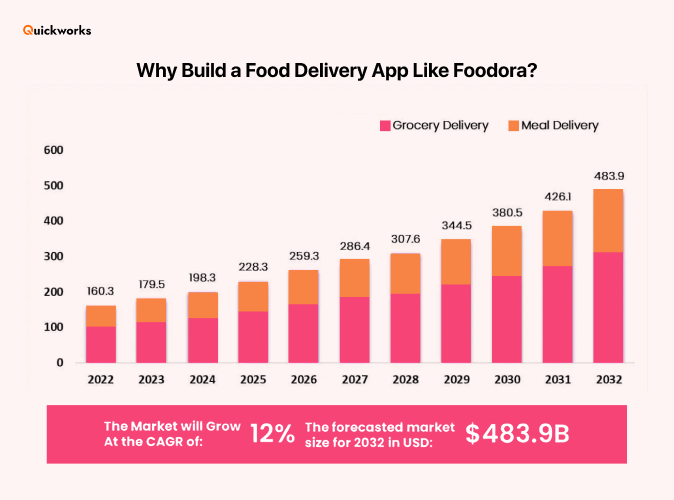
 Phone Number:
  Email: